Tuesday, March 26, 2013

Infants Often Introduced to Solid Food Too Early


Larry Hand
Mar 25, 2013
Early introduction to solid foods for infants under 4 months old is highly prevalent in the United States, even though recommendations call for solid food introduction between 4 and 6 months of age, according to an article published onlineMarch 25 in Pediatrics. The early introduction may leave affected infants vulnerable to higher risk for chronic diseases, such as diabetes and obesity, researchers note.
Heather B. Clayton, PhD, MPH, from the Epidemic Intelligence Service, Centers for Disease Control and Prevention, Atlanta, Georgia, and colleagues analyzed the responses of 1334 mothers who participated in the Infant Feeding Practices Study II between 2005 and 2007. The study group included women who returned completed questionnaires during the months after birth and indicated when they introduced solid foods to their infants and why.
Overall, 40.4% of mothers introduced solid foods before their infants were 4 months old (P < .05), and some did so earlier than 4 weeks of age. Mothers were more likely to do so if they were younger, were unmarried, had less education, earned less, and participated in the Women, Infants, and Children program.
When the researchers accounted for the type of milk feeding of infants, they found that 52.7% of mothers who formula-fed started solid feeding before 4 months, compared with 50.2% of mothers who reported mixed feeding and 24.3% of mothers who breast-fed.
Most mothers (88.9%) gave their reason as "My baby was old enough to begin eating solid food," and many others (71.4%) said, "My baby seemed hungry a lot of the time." Using logistic regression analysis adjusting for age, marital status, education, and other variables, the researchers found that mothers who breast-fed were less likely to cite the reason as "I wanted to feed my baby something in addition to breast milk or formula" compared with women who formula-fed (adjusted odds ratio [aOR], 0.62; 95% confidence interval [CI], 0.39 - 0.99). Mothers who formula-fed were almost twice as likely as mothers who breast-fed to give the reason "A doctor or other health care professional said my baby should begin eating solid food" (aOR 1.79; 95% CI, 1.15 - 2.80).
At the time of the surveys, the American Academy of Pediatrics recommendation for solid food introduction was 4 months. However, in 2012 the AAP changed that to 4 to 6 months, which would equate to a rate of early introduction of 92.9%, the researchers note.
Limitations of the study include the fact that most mothers were white and had moderate incomes. The researchers note that because mothers of lower socioeconomic status are at higher risk for early introduction of solid food, the study results may underestimate the true prevalence.
The researchers conclude, "Our study provides key information on why mothers introduced solid food earlier than recommended and how the commonly cited reasons varied by milk feeding type. This information can be used by health professionals to develop targeted interventions to improve adherence with infant feeding recommendations, with the goal of reducing any morbidity associated with early introduction of solid foods."
Pediatrics. Published online March 25, 2013. Abstract

Sunday, March 24, 2013

Urine collection in newborns


A New Technique for Fast and Safe Collection of Urine in Newborns

María Luisa Herreros Fernández, Noelia González Merino, Alfredo Tagarro García, Beatriz Pérez Seoane, María de la Serna Martínez, María Teresa Contreras Abad, Araceli García-Pose,
Arch Dis Child. 2013;98(1):27-29. 

Technique

Two people (trained nurses and/or physicians) were needed to perform the procedure, and a third to measure the time taken. This technique involves a combination of fluid intake and non-invasive bladder stimulation manoeuvres.
The first step is either breast-feeding or providing formula intake appropriate to the age and weight of the newborn. In babies fed infant formula, 10 ml was provided on the first day of life, increasing to 10ml per day during the first week. From the second week onwards, 25 ml/kg were administered before the onset of stimulation. Twenty-five minutes after feeding, the infant's genitals were cleaned thoroughly with warm water and soap and dried with sterile gauze. A sterile collector was placed near the baby in order to avoid losing urine samples. Before performing the technique, we administered non-pharmacological analgesia, such as non-nutritive sucking or 2% sucrose syrup, to prevent/lessen crying.
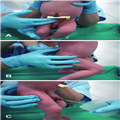
The second step is to hold the baby under their armpits with their legs dangling. One examiner then starts bladder stimulation which consists of a gentle tapping in the suprapubic area at a frequency of 100 taps or blows per minute for 30 s.
The third step is stimulation of the lumbar paravertebral zone in the lower back with a light circular massage for 30 s.
Both stimulation manoeuvres are repeated until micturition starts, and a midstream urine sample can be caught in a sterile collector (figure 1). Success is defined as the collection of a sample within 5 min of starting the stimulation manoeuvres.
Figure 1.
New stimulation technique to obtain midstream urine in newborns. (A) Tapping in the suprapubic area. (B) Stimulation of the lower back. (C) Midstream urine sample collection in a sterile container.

Chlorhexidine Cleansing of Umbilical Cord Increases Cord Separation Time


Mar 18, 2013
 
By Will Boggs, MD
NEW YORK (Reuters Health) Mar 18 - Chlorhexidine cleansing of the umbilical cord reduced infant mortality in a study in Bangladesh, but the increased separation time associated with it was troublesome to some parents, researchers said today in a paper online in Pediatrics.
Umbilical cord cleansing is known to reduce neonatal mortality in low-resource settings with high risk of infection. Doctors therefore need to prepare mothers and fathers in advance, telling them that longer separation times are normal with chlorhexidine and are a sign that the treatment is helping to make the baby safer, lead author Dr. Luke C. Mullany from Johns Hopkins Bloomberg School of Public Health, Baltimore, Maryland told Reuters Health.
"Cleansing of the cord with 4% chlorhexidine, starting as soon as possible after birth and continuing through the first week of life, is the most appropriate care of the cord" wherever neonatal infections are likely, Dr. Mullany said. "I would suggest this includes almost all facility and home birth settings in low and middle income countries."
Dr. Mullany and colleagues investigated separation times and other outcomes of 29,532 newborns in Bangladesh assigned to one of three cord regimens in a cluster-randomized trial: dry and clean cord care, or single- or multiple cleansing with 4.0% chlorhexidine.
Cord separation times were significantly longer with vs without chlorhexidine (mean, 6.90 vs 4.78 days). Separation times were longer than seven days in 13.5% of infants not receiving chlorhexidine, compared with 45.9% of infants in the single-cleansing group and 55.7% of infants in the multiple-cleansing group.
The risk of moderate or severe omphalitis increased by 3.1% for each additional day the cord did not separate. As a result, the risk was 13.8% higher among infants whose cords separated after seven days. These associations, however, were not statistically significant.
Mothers in the multiple-cleansing group were 2.55 times more likely than mothers of infants in the no-chlorhexidine group to report that separation took "longer than usual." Each 24-hour increase in directly observed separation time brought an 18.3% increase in the likelihood of reporting "longer than usual."
Similarly, dissatisfaction with the time to separation was more frequent in the single- (11.1%) and multiple-cleansing (17.6%) groups than in the no-chlorhexidine group (2.5%).
"We know from our community trials that chlorhexidine cord cleansing saves lives and greatly reduces cord infections," Dr. Mullany said. "These additional analyses confirm that putting chlorhexidine on the cord can make the time to separation a little bit longer. Physicians should assure moms and dads that is normal and is a sign that the baby's cord is cleaner and their baby is more protected from infections because of the chlorhexidine."
"I think that dry and clean cord care could be favored only in situations where providers are really confident that they can eliminate exposure of pathogens to the freshly cut cord stump," Dr. Mullany added. "In most resource poor settings, using topical chlorhexidine on the cord provides the simple and cost-effective way to eliminate these exposures."
Pediatrics 2013;131:708-715
.

Friday, March 8, 2013

Corticosteroid Therapy Yields Mixed Results in Children With Pneumonia


Laurie Barclay, MD
Jan 21, 2011
 
January 21, 2011 — Corticosteroid treatment in children with community-acquired pneumonia (CAP) who also have received a beta-agonist benefits those with wheezing but may lead to worse outcomes in children without wheezing, according to the results of a multicenter, retrospective cohort study published in the January issue of Pediatrics.
"Corticosteroids inhibit the expression of many proinflammatory cytokines released during the course of [CAP] infection," write Anna K. Weiss, MD, from Children's Hospital of Philadelphia, Pennsylvania, and colleagues. "Corticosteroids have been found in some studies to be associated with improved clinical outcomes in adults with pneumonia. No studies have investigated corticosteroid use in children with pneumonia."
The study goal was to examine outcomes associated with use of systemic corticosteroid therapy for children hospitalized with CAP, using data from 36 children's hospitals for 20,703 children aged 1 to 18 years (median age, 4 years). The primary exposure was the use of adjunct systemic corticosteroids, and the primary study endpoints were length of stay (LOS), readmission, and total costs of hospitalization. The investigators adjusted for potential confounders using multivariable regression models and propensity scores.
Median LOS was 3 days. Of the 20,703 children, 7234 (35%) received adjunctive treatment with corticosteroids. Readmission was needed in 245 patients (1.2%). Overall, systemic corticosteroid therapy was associated with shorter LOS, with an adjusted hazard ratio (HR) of 1.24 (95% confidence interval [CI], 1.18 - 1.30). Among children who received treatment with beta-agonists, LOS was shorter in children treated with corticosteroids than in children not treated with corticosteroids (adjusted HR, 1.36; 95% CI, 1.28 - 1.45).
In contrast, however, among children not treated with beta-agonists, LOS was longer in those given corticosteroids than in those not receiving them (adjusted HR, 0.85; 95% CI, 0.75 - 0.96), and hospital readmission was more likely (adjusted odds ratio, 1.97; 95% CI, 1.09 - 3.57).
"Results showed that corticosteroid treatment in children with pneumonia is common and its use is highly variable across institutions," the study authors write. "Although corticosteroid therapy may benefit children with acute wheezing treated with beta-agonists, corticosteroid therapy may lead to worse outcomes for children without wheezing."
Limitations of this study include possible inclusion of patients with simple asthma exacerbation rather than CAP, possible unmeasured confounding or residual confounding by indication, and the ability to record only readmissions that occurred at the same hospital as the index admission. In addition, the effect of adjunct corticosteroid therapy on other important outcomes such as progression of illness and the development of pneumonia-associated complications such as empyema could not be evaluated in this study.
"Our results do not support the routine use of corticosteroid treatment of children with CAP," the study authors conclude. "Our findings also have important implications for the design of future clinical trials, particularly with regard to planning of sample size and study cohorts. Because the practice of prescribing adjunct corticosteroids to children with CAP is both common and highly variable, a randomized trial is warranted to allow further exploration of which pediatric populations might benefit from systemic corticosteroid therapy."
The National Institutes of Health supported this study. The study authors have disclosed no relevant financial relationships.
Pediatrics. 2011;127:e255-e263.

Skin Signals Severe Outbreak of Hand, Foot, and Mouth Disease


Damian McNamara
Mar 07, 2013
 
MIAMI BEACH, Florida — Children with a severe form of hand, foot, and mouth disease infected during a recent enterovirus outbreak in the United States displayed unusual skin signs that could confuse clinicians, researchers report.
"We were surprised by the variety and extent of this exanthema," said Vikash Oza, MD, a second-year dermatology resident from the University of California at San Francisco, who presented study results here at the American Academy of Dermatology 71st Annual Meeting. "Classic hand, foot, and mouth disease has vesicles restricted to the hands, feet, and diaper region, but this new form is widespread over the entire body."
This insight stems from a case series of 81 affected children assessed at 7 academic dermatology centers in various states.
The analysis, presented during a crowded late-breaking research session, showed that the severe disease was caused by coxsackievirus A6 (CVA6).
Dr. Oza pointed out that CVA6 infection can cause a wide variety of skin manifestations, which can be confused with eczema herpeticum, vasculitis, impetigo, or primary immunobullous disease. When appropriate, herpes simplex and varicella zoster virus infection must also be ruled out, he noted.
Cutaneous Features
"While the cutaneous features can vary, there is usually a clue — such as typical oral erosions, football-shaped vesicles on hands and feet, and viral symptoms — that the patient has an underlying enteroviral infection," Dr. Oza said.
 
In most of North America, enterovirus season is approaching.
 
The infections in this study could be distinguished from more serious infections caused by other enteroviral strains by a lack of serious systemic illness.
Although cases can present anytime throughout the calendar year, the peak incidence of enterovirus infection tends to occur in the spring, Dr. Oza said. "In most of North America, enterovirus season is approaching."
To find out more about these atypical exanthems, the researchers, led by Erin Mathes, MD, from the University of California at San Francisco, used clinical criteria to diagnose 63 children with atypical hand, foot and mouth disease and 17 children with CVA6 infection. The median age was 1.5 years old (range, 4 months to 16 years).
To aid in the differential diagnosis, the researchers identified 5 morphologic features of CVA6 infection:
  • In 99% of cases, vesiculobullous and erosive eruptions are widespread on the trunk and elsewhere (in infants younger than 1 year, they can include marked perioral distribution and large bullae).
  • In 55% of cases, eczema coxsackium, caused by widespread replication of the CVA6 on the skin of children with atopic dermatitis, creates a condition that clinically resembles eczema herpeticum.
  • In 33% of cases, Gianotti-Crosti-like eruptions develop.
  • In 17% of cases, petechiae and purpura develop.
  • Delayed onychomadesis and acral desquamation can arise weeks later.
"CVA6 is an emerging and important cause of hand, foot, and mouth disease worldwide and in the United States," Dr. Oza said.
Scott Norton, MD, from the Children's National Medical Center in Washington, DC, who was asked byMedscape Medical News to comment on the findings, explained that this "new form of hand, foot, and mouth disease can have a dramatic presentation with red, almost hemorrhagic, blisters all over the body."
Benign, But Startling
Ordinarily, hemorrhagic blisters are considered a serious dermatologic emergency because they are typically seen only in the most serious of disorders, he noted. "In this new hand, foot, and mouth disease situation, however, families can be reassured that things are fine."
Dr. Norton added that "one should add this to the differential for disorders with widespread blisters."
Hundreds of emergency department visits across the United States each year are driven by this benign but startling condition.
During the discussion period at the meeting, a delegate asked why researchers are sure that the viral pathogen is driving this phenotype.
"Great question," Dr. Oza replied. "The only pathogen we isolated was coxsackievirus A6. Other data from Taiwan [obtained during a CVA6 outbreak] show the same phenotype with the same oral predilection."
Last March, the Centers for Disease Control and Prevention published initial findings of some of the earlier cases from an outbreak in 4 states (MMWR Morb Mortal Wkly Rep. 2012;61:213-214).
The researchers and Dr. Norton have disclosed no relevant financial relationships.
American Academy of Dermatology (AAD) 71st Annual Meeting. Presented March 2, 2013.

Thursday, March 7, 2013

Pediatric Ear Infection: Updated AAP Treatment Guidelines


Laurie Barclay, MD
Feb 25, 2013
 
Updated American Academy of Pediatrics (AAP) clinical practice guidelines address the diagnosis and management of uncomplicated acute otitis media (AOM) in children aged 6 months to 12 years. The new recommendations, which offer more rigorous diagnostic criteria to reduce unnecessary antibiotic use, were published online February 25 and in the March issue of Pediatrics.
"Although OM remains the most common condition for which antibacterial agents are prescribed for children in the United States, clinician visits for OM decreased from 950 per 1000 children in 1995–1996 to 634 per 1000 children in 2005–2006," write Allan S. Lieberthal, MD, and colleagues. "There has been a proportional decrease in antibiotic prescriptions for OM from 760 per 1000 in 1995–1996 to 484 per 1000 in 2005–2006."
The guideline updates the 2004 AOM guideline from the AAP and American Academy of Family Physicians, based on a comprehensive literature review in 2009 by an expert panel from the AAP, the Agency for Healthcare Research and Quality, and the Southern California Evidence-Based Practice Center. The panel used systematic grading of evidence quality and benefit-harm analysis to develop the guideline, which underwent comprehensive peer review.
Taking into account patient age and symptom severity, AOM may be managed with antibiotics and analgesics or with observation alone. The guidelines cover pain management, antibiotic options, prevention, and recurrent AOM (an addition to the 2004 guideline).
Specific action statements include the following:
  • AOM should be diagnosed when there is moderate to severe tympanic membrane (TM) bulging or new-onset otorrhea not caused by acute otitis externa.
  • AOM may be diagnosed for mild TM bulging and ear pain for less than 48 hours or for intense TM erythema. In a nonverbal child, ear holding, tugging, or rubbing suggests ear pain.
  • AOM should not be diagnosed when pneumatic otoscopy and/or tympanometry do not show middle ear effusion.
  • AOM management should include pain evaluation and treatment.
  • Antibiotics should be prescribed for bilateral or unilateral AOM in children aged at least 6 months with severe signs or symptoms (moderate or severe otalgia or otalgia for 48 hours or longer or temperature 39°C or higher) and for nonsevere, bilateral AOM in children aged 6 to 23 months.
  • On the basis of joint decision-making with the parents, unilateral, nonsevere AOM in children aged 6 to 23 months or nonsevere AOM in older children may be managed either with antibiotics or with close follow-up and withholding antibiotics unless the child worsens or does not improve within 48 to 72 hours of symptom onset.
  • Amoxicillin is the antibiotic of choice unless the child received it within 30 days, has concurrent purulent conjunctivitis, or is allergic to penicillin. In these cases, clinicians should prescribe an antibiotic with additional β-lactamase coverage.
  • Clinicians should reevaluate a child whose symptoms have worsened or not responded to the initial antibiotic treatment within 48 to 72 hours and change treatment if indicated.
  • In children with recurrent AOM, tympanostomy tubes, but not prophylactic antibiotics, may be indicated to reduce the frequency of AOM episodes.
  • Clinicians should recommend pneumococcal conjugate vaccine and annual influenza vaccine to all children according to updated schedules.
  • Clinicians should encourage exclusive breastfeeding for 6 months or longer.
The AAP supported development of these guidelines and addressed disclosures of the guidelines authors.
Pediatrics. 2013;131:e964-e999.